
 “Then said he, Unto what is the kingdom of God like? and whereunto shall I resemble it? It is like a grain of mustard seed, which a man took, and cast into his garden; and it grew, and waxed a great tree; and the fowls of the air lodged in the branches of it,” Luke 13:18-19.
I will never forget brother Jordan Khan preaching on the above brief parable in Lisbellaw Free Presbyterian Church back in 1970. Brother Khan was a visitor to Ulster from India and preached in various congregations of our denomination. He “was a good man, and full of the Holy Ghost and of faith.” I recall his telling us that his father was a prayer partner to ‘Praying Hyde’, John Nelson Hyde (November 9, 1865 – February 17, 1912) an American missionary who preached in the Punjab state in India.
Jordan Khan’s exposition was an early warning of what, some 30-40 years later began to take place within the Free Presbyterian Church.
Please note from this parable:
I. THE TRUE WORK OF GOD HAS VERY SMALL AND HUMBLE BEGINNINGS!
“Unto what is the kingdom of God like? and whereunto shall I resemble it? It is like a grain of mustard seed.”
1. The greatest period of blessing and expansion in this New Testament age began with a small group of men and women meeting in prayer. “And when they were come in, they went up into an upper room, where abode both Peter, and James, and John, and Andrew, Philip, and Thomas, Bartholomew, and Matthew, James the son of Alphaeus, and Simon Zelotes, and Judas the brother of James. These all continued with one accord in prayer and supplication, with the women, and Mary the mother of Jesus, and with his brethren,” Acts 1:13-14. We are told that earlier when they gathered in this same room: “Then the same day at evening, being the first day of the week, when the doors were shut where the disciples were assembled for fear of the Jews,” John 20:19.
The early days of the apostolic church were indeed days of humble and trembling beginnings.
They were days of clinging to the Lord for mercy and help in the face of the opposition of men stirred up by the devil.
2. Some are still alive within the ranks of the Free Presbyterian Church who will recall the early days in the 1950s when the opposition of our ecumenical opponents was most vicious. I wonder how many know that a godly founding member of Ballymoney Free Presbyterian Church was assaulted and beaten by an ecumenical Presbyterian minister and some of his henchmen?
This spirit was still very much alive in the 1960s. My late wife, Ann, a graduate from Queen’s University, Belfast, was unable to obtain a teaching position because she was a Free Presbyterian. Often times, once it was known that she was a Free Presbyterian, the interview was abruptly ended. (more…)
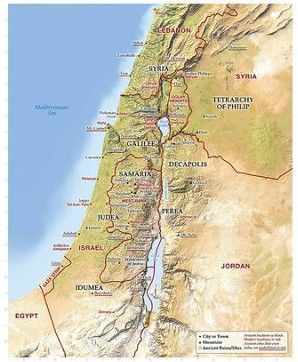 “In that day will I raise up the tabernacle of David that is fallen, and close up the breaches thereof; and I will raise up his ruins, and I will build it as in the days of old: that they may possess the remnant of Edom, and of all the heathen, which are called by my name, saith the LORD that doeth this. Behold, the days come, saith the LORD, that the plowman shall overtake the reaper, and the treader of grapes him that soweth seed; and the mountains shall drop sweet wine, and all the hills shall melt. And I will bring again the captivity of my people of Israel, and they shall build the waste cities, and inhabit them; and they shall plant vineyards, and drink the wine thereof; they shall also make gardens, and eat the fruit of them. And I will plant them upon their land, and they shall no more be pulled up out of their land which I have given them, saith the LORD thy God,” Amos 9:11-15.