
Archives for

Article

Psalm-singing Ironsides

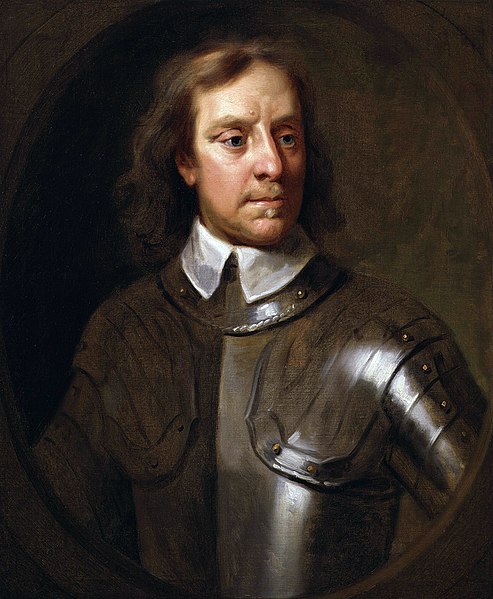
Oliver Cromwell, portrait by Samuel Cooper, 1656

“‭Let‭ the high‭ ‭praises‭ of God‭ ‭be‭ in their mouth‭, and a twoedged‭ sword‭ in their hand‭;‭ ‭to execute‭‭ vengeance‭ upon the heathen‭, ‭and‭ punishments‭ upon the people‭;‭ ‭to bind‭‭ their kings‭ with chains‭, and their nobles‭‭ with fetters‭ of iron‭;‭ ‭to execute‭‭ upon them the judgment‭ written‭‭: this honour‭ have all his saints‭. Praise‭‭ ye the LORD‭,‭”‬‬‬‬‬‬‬‬‬‬‬‬‬‬‬‬‬‬‬‬‬‬‬‬‬‬‬‬‬‬‬‬‬‬‬‬‬‬‬‬‬‬‬‬‬ Psalm 149:6-9.

One old saintly soldier of Christ made this comment on these words of the Psalmist.

“Cromwell’s Ironsides were sneeringly called Psalm singers; but God’s Psalm singers are always Ironsides. He who has a ‘new song in his mouth’ is ever stronger, both to suffer and to labour, than the man who has a dumb spirit and a hymnless heart. When he sings at his work, he will both do more and do it better than he would without his song. Hence, we need not be surprised that all through its history the Church of God has travelled ‘along the line of music’.” —‭William Taylor.‬

Cromwell’s ‘Ironsides’ were providentially used to overthrow and punish the wickedness of Charles I and his evil regime.

Sadly the people of England preferred the degenerate ways of the Stuarts to the more devout ways of Oliver Cromwell. Consequently, after the death of the ‘Lord Protector’, at 59 years of age, in 1658, the people of the ‘ruling classes’ of England brought back the Stuart rule and Charles II, if anything a more wicked version of his father, was placed upon the throne!

So ended a very important era in the history of these Isles. The causes Oliver Cromwell espoused, dissenting preachers and their message, were virtually outlawed under Charles II. It was during his reign that the ‘Great Ejection’ took place!

The ‘Great Ejection’ followed the Act of Uniformity in 1662 in England. Several thousand Puritan ministers were forced out of their positions in the Church of England. It was largely a consequence of the ‘Savoy Conference’ of 1661.

That Conference was convened by Gilbert Sheldon, in his lodgings at the Savoy Hospital in London. The Conference sessions began on 15 April 1661, and continued for around four months. By June, a deadlock became apparent.

The conference was attended by commissioners: 12 Anglican bishops, and 12 representative ministers of the Puritan and Presbyterian groups. Each side also had nine deputies (called assistants or coadjutors). The nominal chairman was Accepted Frewen, the Archbishop of York.

The object was to revise the Book of Common Prayer. Richard Baxter for the Presbyterian side presented a new liturgy, but this was not accepted. As a result the Church of England retained internal tensions about governance and theology, while a significant number of dissenters left its structure and created non-conformist groups retaining Puritan theological commitments.

In 1662 the Act of Uniformity followed, mandating the usage of the 1662 Book of Common Prayer and spurring the Great Ejection.

The Act of Uniformity prescribed that any minister who refused to conform to the 1662 Book of Common Prayer by St Bartholomew’s Day (24 August) 1662, should be ejected from the Church of England. This date became known as ‘Black Bartholomew’s Day’ among Dissenters, a reference to the fact that it occurred on the same day as the St Bartholomew’s Day massacre of 1572.

Oliver Heywood estimated the number of ministers ejected at 2,500. This group included Richard Baxter, Edmund Calamy the Elder, Simeon Ashe, Thomas Case, John Flavel, William Jenkyn, Joseph Caryl, Benjamin Needler, Thomas Brooks, Thomas Manton, William Sclater, Thomas Doolittle and Thomas Watson. Biographical details of ejected ministers and their fates were later collected by the historian Edmund Calamy, grandson of the elder Calamy.

Although there had already been ministers outside the established church, the Great Ejection created an abiding concept of non-conformity. Strict religious tests of the ‘Clarendon Code’ and other ‘Penal Laws’ left a substantial section of English society excluded from public affairs, and also university degrees, for a century and a half. (more…)
Questions for Carla Lockhart, MP

I am compelled to send out this article in response to what is reported in the ‘Belfast Newsletter’ today!

I have two questions for Carla Lockhart, a Free Presbyterian, as a result of what she is here reported to have said.

“Wherein was she ‘honoured’ to escort the man guilty of forcing upon the children attending state schools here, the abominable, ungodly and perverted ‘Statutory guidance on relationships education, relationships and sex education (RSE) and health education’ and did she, as a professed follower of the Lord Jesus Christ, while she had ‘some very direct conversations with him in recent days about a perceived lack of understanding of Unionism and our culture’, take time to rebuke him for his defiance of God and his lack of understanding of His Holy Law by his action on RSE?”.


Praise for Twelfth and Thirteenth displays in Lurgan, Loughbrickland, Banbridge, Portadown and Scarva

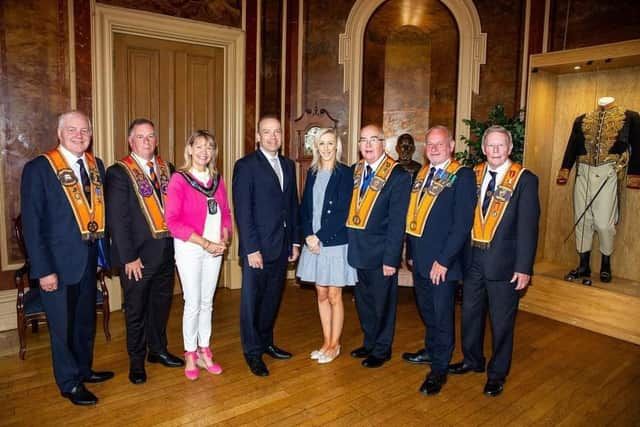
DUP MP Carla Lockhart said she was honoured to bring the Secretary of State to Lurgan for the Twelfth and give him a “baptism of culture”.

By Graeme Cousins

Published 14th Jul 2023

The Belfast Newsletter

The Upper Bann representative believes that the region excelled over the past few days in terms of Orange Order and Royal Black Preceptory parades.

She said: “What a display of culture – Lurgan, Loughbrickland, Portadown, Scarva, Banbridge and every town and village in between excelled.

It was an honour to host the Secretary of State Chris Heaton-Harris at the Co Armagh parade in Lurgan. With over 50,000 spectators, 70 bands and hundreds of Orangemen he got a baptism of culture .

Carla Lockhart gave Chris Heaton-Harris a tour of Brownlow House during the Co Armagh Twelfth in Lurgan

We have had some very direct conversations with him in recent days about a perceived lack of understanding of Unionism and our culture. Yesterday was a great opportunity for him to see first hand the rich fabric of pageantry, colour and faith that makes our Twelfth of July so special. (more…)

A very compelling letter

The Irish Republic is not, and never has been, a friendly neighbour”

(Belfast Newsletter, 14th July 2023)

A letter from Tom Ferguson, Ballymoney

I read Tom Cooper’s letter on bonfire hatred with great interest, particularly his assertion that the Irish Republic is a ‘peaceful neighbouring state’ (‘Letter: Incitement to hatred has been allowed to become part of unionist culture,’ July 13, see link below).

Would this by any chance be the state that in 1925 signed up to a solemn international treaty to respect the current border between it and Northern Ireland? And then in 1937, in shocking bad faith, reneged on its solemn word and laid claim to Northern Ireland, thus providing a quasi legal justification for subsequent IRA terror campaigns? Hardly the actions of a friendly neighbour.

Would this be the state that had prominent government and establishment figures that gave assistance to the establishment of the Provisional IRA, and therefore the subsequent decades of bloodshed and mayhem? And allowed its territory to be used as a safe haven from which to organise atrocities like Kingsmills, Tullyvallen, Darkley, and other sectarian atrocities in Northern Ireland? Hardly the actions of a friendly neighbour.

Would this be the state that for decades refused to extradite murderers of policemen and soldiers, on the grounds that such murders were ‘political’? And when an extradition treaty of sorts was agreed, used nit-picking details like a comma in the wrong place, to ensure that it was as ineffective as possible? Hardly the actions of a friendly neighbour.

Would this be the state that, (admittedly partly due to the ineptitude of some unionist politicians), ganged up with their masters in the European Union, to ensure that there would be a hard border in the Irish Sea between Northern Ireland and the rest of the UK? Hardly the act of a friendly neighbour.

In short, in the eyes of the unionist community, the Irish Republic is not, and never has been, a friendly neighbour. At the present time it is actively working, with a treacherous, supine British establishment, to annex Northern Ireland, and is therefore our bitter enemy, and it is hardly surprising that its IRA inspired tricolour is consequently treated with such loathing and contempt.

Should the day ever dawn when the the Irish Republic publicly apologises to all the people that have been wronged and maimed, and the families of those who have been murdered due to their past policies. And also gives up their insistence on the current hard border in the Irish Sea, then, and only then, would any self – respecting unionist feel obliged to treat their flag with anything other than contempt.

Tom Ferguson, Ballymoney