“The preacher sought to find out acceptable words: and that which was written was upright, even words of truth,” Ecclesiastes 12:10.
Earlier today, I had started and almost finished an examination of a statement issued by Rev Paul Thompson yesterday, defending his decision to participate in a meeting in Draperstown Presbyterian Church, which I, and others, had criticised.
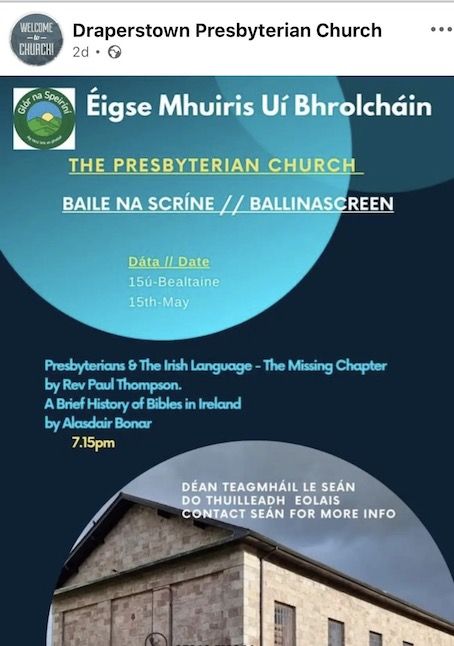
The organisers of the meeting was a group going by the Irish name:

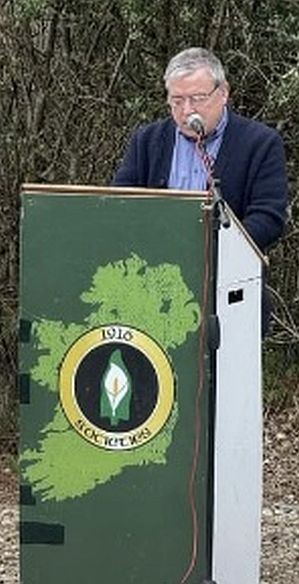
The sympathies of this organisation may be understood by considering the activities of the man who is its secretary:
Mr Seán Mac Giolla Fhiondáin
I understand from a Google search, that his name basically means, ‘Son of the servant of St. Fionnán/Brendan. The name derives from Giolla Fhiondáin, where Giolla means devotee or servant, and Fhiondáin refers to the saint. While there are multiple Irish saints named Fionnán, the name is often associated with Saint Finnian of Clonard.’
Hmmm!!!!!
This individual recently took part in a ‘commemoration gathering’, honouring the IRA terrorists shot by the army during their attack on Loughgall police station, back in 1987.
I left off that article because the following statement had been issued by Rev Paul Thompson.
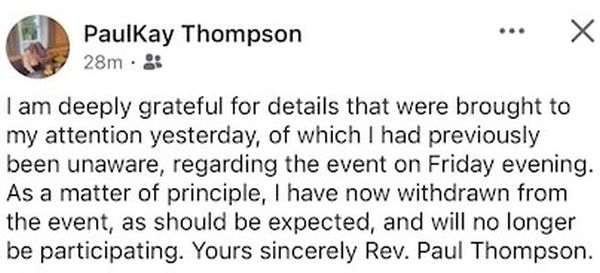
That statement would imply that Rev Thompson was not acquainted with the character of the organisation from which he had accepted an invitation to speak at a meeting in Draperstown Presbyterian Church.
If I believed that, then I must consider Mr Thompson quite a naive fool to accept an invitation from an organisation that went under an Irish name and yet he did not investigate just who or what it was he was getting involved with!
I simply do not believe that Mr Thompson is an ‘innocent abroad’. I must reject the implication that he did not know who he was getting mixed up with!
Last Year
I posted an article back in April last year, entitled:
The Irish Language and the Sinn Fein/IRA campaign to extort more money from the public purse to finance their ‘Gaelitising’ Ulster!
It was a response to a report by the BBC here in Northern Ireland, of a meeting in Antrim. (more…)