
Archives for

Article

Thoughts on the history of professing Christianity, Part 5

We continue with extracts from Benjamin Wills Newton’s book, Prospects of the Ten Kingdoms, the chapter 6 — THOUGHTS ON THE HISTORY OF PROFESSING CHRISTIANITY, AS GIVEN IN THE PARABLES OF MATTHEW XIII.

I would commend a close reading of these extracts for they deal with the very issue of ‘decay within Christendom’ that we see all around.

Here is Part 5, which covers pages 165-169.

Click here to see the other articles about this book.


The parables of our Lord are addressed chiefly to conscience. If our consciences are perverted we shall either give no heed to the instruction, or else mistake, and probably, reverse the meaning. For example, he who conceives the honour and dignity of this present age to be according to God, and therefore well suited for His Church, will be sure to find in the parable of the “mustard seed” an encouragement to aspire after worldly greatness. He who admires the present condition and influence of professing Christianity, will not be hindered by the mere circumstance of leaven being uniformly used in the Scripture as the type of evil, from interpreting it as the symbol of the diffusiveness and diffusion of good. Parables, if they do not enlighten, blind.* (more…)
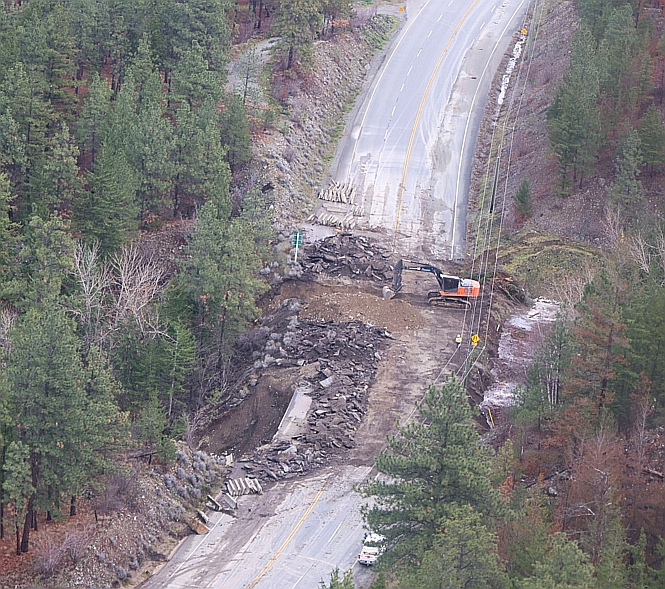
Canadian floods invoke thoughts of God’s judgment!

We have heard of the horrendous rain storm that hit the eastern area of British Columbia, Canada, a day or so ago.
It took place in an area some 100 miles east of Penticton where the Editor’s son Andy Foster ministers.

He provided some links to newspaper reports of the devastation wrought be the storm.

It would remind us of the judgments of God on Egypt for it is estimated that thousands of farm animals perished in the floods.Here are the links to the news reports and also today’s school study. Simple copy and paste the links into your web browser. (more…)

Putting away the evil of the day

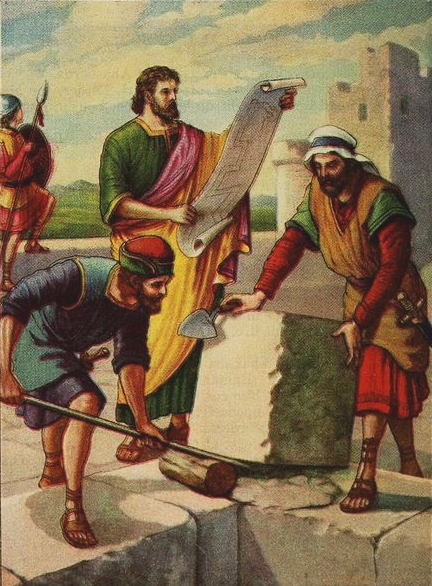
Nehemiah rebuilding the walls of Jerusalem

“Ye that put far away the evil day,” Amos 6:3.

Today, I read Amos chapter three as part of my daily reading. I follow the Robert Murray M‘Cheyne’s Bible Reading Calendar, a wonderful aid to a proper reading and systematic of God’s Word which I recommend to all. It can be easily obtained as a ‘down load’ from the internet.

The chapter begins with those familiar words: “Woe to them [that are] at ease in Zion,” Amos 6:1. As I read them I could not help but think that is what afflicts us all today! There is a spirit of ‘ease’ amongst us when the very opposite ought to be the case. I always think of Nehemiah when I think of these words.

“The words of Nehemiah the son of Hachaliah. And it came to pass in the month Chisleu, in the twentieth year, as I was in Shushan the palace, that Hanani, one of my brethren, came, he and [certain] men of Judah; and I asked them concerning the Jews that had escaped, which were left of the captivity, and concerning Jerusalem. And they said unto me, The remnant that are left of the captivity there in the province [are] in great affliction and reproach: the wall of Jerusalem also [is] broken down, and the gates thereof are burned with fire. And it came to pass, when I heard these words, that I sat down and wept, and mourned [certain] days, and fasted, and prayed before the God of heaven,” Nehemiah 1:1-4.

Without imputing any fault to Nehemiah, it is obvious that he had his state of mind and heart altered due to the report by his brother Hanani of the state of the remnant of the Jews still in Jerusalem and the condition of the city. He later explained his crestfallen state to Artaxerxes the king in the following words: “Let the king live for ever: why should not my countenance be sad, when the city, the place of my fathers’ sepulchres, [lieth] waste, and the gates thereof are consumed with fire?” Nehemiah 2:3. (more…)