
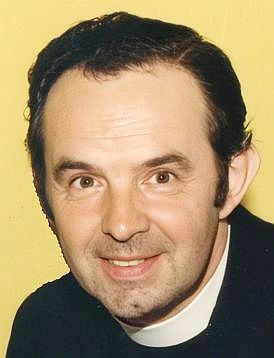
This is an electronic transcript of Dr S B Cooke’s sermon, ‘Free Presbyterianism, why?’, preached back in 2000 in Mourne Free Presbyterian Church.
I believe that it is a faithful copy of what our esteemed brother preached and it may help those who wish to study more closely what Dr Cooke said.
It stands as a monument to the wisdom and faithfulness of our Free Presbyterian forefathers!
Sincerely in Christ’s name,
Ivan Foster
Click here to listen to or watch the preaching of this sermon.
Click here to download a PDF of this transcript.
Transcript of a sermon preached by Dr. S. B. Cooke in 2000 at Mourne Free Presbyterian Church.
Thank you very much.
I do count it a great honor and privilege to be with you here this evening to have fellowship with the young people of our church. And we do pray that God himself will come and meet with us, that he might bless his word to our hearts, and that he might challenge you upon the subject upon which we are seeking this evening to meditate upon. I trust you have your Bible with you.
We’re going to be reading from one of the historical books of the Old Testament, 1 Samuel chapter 17. I’m commencing to read at the 20th verse. 1 Samuel chapter 17 and verse 20.
And David rose up early in the morning, and left his sheep with the keeper, and took and went as Jesse had commanded him. And he came to the trench, as the host was going forth to the fight, and shouted for the battle. For Israel and the Philistines had put the battle in array, army against army. And David left his carriage in the hand of the keeper of the carriage, and ran into the army, and came and saluted his brethren. And as he talked with them, behold, there came up the champion, the Philistine of Gath, Goliath by name, out of the armies of the Philistines, and spake according to the same words. And David heard them.
And all the men of Israel, when they saw the man, fled from him and were sore afraid. And the men of Israel said, Have you seen this man has come up surely to defy Israel as he come up and it shall be that the man who killeth him, the king will enrich him with great riches and will give him his daughter and make his father’s house free in Israel. And David speak to the man that stood by him saying, what shall be done to the man that killeth this Philistine and take it away the reproach from Israel. For who is this uncircumcised Philistine, that he should defy the armies of the living God? And the people answered him after this manner, saying, So shall it be done to the man that killeth him.
And Eliab his eldest brother heard when he spake unto the men. And Eliab’s anger was kindled against David, and he said, Why camest thou down hither? And with whom hast thou left those few sheep in the wilderness? I know thy pride and the naughtiness of thine heart, for thou art come down that thou mightest see the battle. And David said, what have I now done? Is there not a cause?
Amen. We trust the Lord will add his own divine blessing upon this portion from his inspired and infallible truth. Let’s bow our heads in a short word of prayer.
Our Father, we do thank Thee for this opportunity of meeting together. We pray, Lord, that as we look into Thy Word, that Thou, who art the divine author of the divine book, even God the Holy Spirit, might presence Himself with us in a real and definite manner. We ask you, our Father, that Thou wilt shine upon the sacred page. Thou wilt bless Thy truth to every heart and challenge every soul in our midst this evening. We ask it for the Saviour’s sake. Amen.
The 29th verse of the portion that we read together here from 1 Samuel 17 reads, and David said, what have I now done? Is there not a cause?
These words of David were spoken when the armies of Israel were threatened by Goliath, the giant of the armies of the Philistines. David was but a shepherd boy and he was visiting the battlefield to meet up with his brethren. Other members of the household, his older brothers were there in the army of Saul. And while David was there, he heard this challenge from Goliath. When Goliath challenged Israel, its armies, and above all, its God. And David was filled with righteous indignation.
He says here, who is this uncircumcised Philistine that he should defy the armies of the living God? However, the moment he spoke the words and took this attitude, we discover that his motives were questioned, his whole attitude was criticised, he was accused of being a naughty boy, a hypocrite, out of place, and some of the sternest critics were members of his own family. And David utters these words in the light of these circumstances. He said, what have I now done? Is there not a cause?
Next year, God willing, The Free Presbyterian Church will be celebrating its 50th anniversary. Ever since its inception, it has been under fire from many quarters. Its ministers have been hated and despised by many, especially the religious leaders of this province, for many years. its motives have been questioned, its members have been despised, hated, scorned, and some even persecuted. And so we would, like David, we would ask in the midst of all that goes on against us as a denomination, we would re-echo these words.
What have we now done? Is there not a cause? I want to speak this evening upon the subject of Free Presbyterianism. Why? Why is there a Free Presbyterian Church in Ulster? Why has God seen fit to raise up this witness in these days in which we live?
After all, there is an Irish Presbyterian Church. So you would think, looking at it from the human viewpoint, that the Presbyterians of this province have been already catered for. So why then Free Presbyterian? And I might say in opposition, and we’re not ashamed to use that word, in opposition to Irish Presbyterianism. Now why?
The Bible makes it abundantly clear that as this age draws to a close, there will be a great apostasy. There will be a rejection of the things of God. That rejection will not only come from the world, who are always against the things of God, but that rejection will come from churches, who are supposed to preach the truth, but instead of preaching that for which they were built, they reject it. The Bible warns about this in the whole epistle of Jude. That whole book speaks of the apostasy of the last days.
The Apostle Paul, when he was referring to this in his last letter, and he was talking to young Timothy who would take his place, and he was urging him to preach the truth and preach the Word of God, he said, because there comes a time when they will not endure sound doctrine, and the truth will be turned into fables. The Bible goes on to tell us that not only will the religious churches, the mainline churches, not only here in this province, but right across the world, not only do they reject the fundamentals of the faith, but they unite to oppose those who do stand for it.
And this, as a church, we have found to be true. The main Protestant churches in this province, the Church of Ireland, the Methodist Church, they belong to the World Council of Churches, a council which purports to speak of the unity of the people of God but it is a council that is earthly and sensual and devilish. It is actually formed to oppose the truth of God. The Irish Presbyterian Church is not in the World Council of Churches. It left it some time ago, not because of doctrinal differences, but because of social differences.
But I want to, I’m going to prove to you this evening that all of these churches are what we would call ecumenically minded. They’re binding together against the gospel. and although the Irish Presbyterian Church is not in the World Council of Churches, I’m going to prove this evening that it is ecumenically of the World Council of Churches.
And so when I come to look at this subject this evening, Free Presbyterian, why? Why is there a Free Church? First of all, I would say regarding, because I’m going to put the spotlight this evening upon the Irish Presbyterian Church, because after all, that is why, one of the principal reasons, why this church came into being.
The first thing I want to say is this, that the Irish Presbyterian Church has departed from the faith. I want to make that clear. It has departed from the faith. Now, I don’t mean that every person in the Irish Presbyterian Church is a non-believer, an apostate, an infidel. I don’t mean that at all. I don’t mean that every minister in the Irish Presbyterian Church is a non-believer and an apostate. No, I’m not saying that.
There are evangelicals. There are people who preach the Word of God to a degree, would claim to be born again, and would tell us that they are serving God. But what I am saying this evening, and what I will endeavour to show you tonight, is that the Irish Presbyterian Church, as a church, is ecumenically minded. its doctrines are seriously flawed, and its foundations, as we shall see, are already destroyed. And that the people who are in it, purporting to be Christians, are guilty of a fearful compromise before the living God.
I want to take you back some 140 years or so, 141 to be exact, to the great 1859 revival. In 1859, this province was shaken by the power of God. a great movement of the Holy Ghost. 100,000 people in 1859, it is reckoned, put their trust in the Lord Jesus Christ. The church that benefited most from the 1859 revival was none other than the Irish Presbyterian Church.
Through that revival, it became the most powerful Protestant denomination in Ireland. It was a bulwark for truth. It stood for God and sought to uphold the word of the living God. But before that revival, the Presbyterians of Ireland had to make some momentous and far-reaching decisions. Under the ministry of Dr. Henry Cook, and I would recommend the young people here this evening, if you can get a copy of the life of Dr. Henry Cook, you should get it, and you should read it.
Because under his ministry, and due to his tremendous stand for God over many years at great cost, the Irish Presbyterian Church became doctrinally sound. He laid the foundation under God for the revival that followed, because God does not bless apostasy. He does not bless false teaching, false doctrine. And it was Henry Cook, under his leadership, that the Irish Presbyterian Church became doctrinally pure.
You see when he came into the ministry in those days, the church was riddled with Arians. Now an Arian was a Unitarian. That meant he didn’t believe in the Westminster Confession of Faith, he didn’t believe in the Deity of Christ, and he most certainly didn’t believe in the Blood Atonement. The great W.P. Nicholson used to call them the unbloody Unitarians. And the Church was riddled with Unitarianism. And Unitarian ministers had the same standing as Trinitarians.
The Trinitarians were the believing part of the Church. They were men who were prepared to subscribe to the Westminster Confession of Faith, to own to the doctrines of grace, and to seek to proclaim the truth as it is in the Word of God. And Henry Cook’s great basis for the fight that took place, the spiritual fight that took place in the Church, a fight that many people thought he was going to wreck and ruin everything. The basis was this, and I want you to listen because I’m just going to quote what he said. He said, “if you can convince me from scripture that Trinitarians, that’s Bible believers, Arians and Socinianists, that’s Unitarians, can form a scriptural church and cordially unite in listening to and ordaining one another, I shall resign my present views and unite with you in preserving our present Constitution.”
And I say this evening, that those words are as powerful and as real and as true today as when they were uttered many, many years ago.
And of course, he fought the fight. God, in mercy, gave him a great victory. And he lived to see the time when there was a separation amongst Irish Presbyterians. On one hand, the Trinitarians united together. Bible believers and those who had subscribed to the Westminster Confession of Faith. And the Unitarians, who were just as large a number in those days, separated and formed their own church known, and some of them are still in existence today, as the non-subscribing Presbyterian Church. And so the separation took place. And when it did, God blessed the Trinitarians. God blessed the Bible believers. Years later, some years later, 15, 20 years later, was a mighty and God-glorifying revival.
But I say this to young people this evening. The battle for truth has got to be fought in every generation. You are growing up in this world. The battle has not been won as such. It will have to be fought on your day and in your generation against apostasy and against unbelief.
Just around 67 years later, think of it, 67 years later, after that great revival, that same church, the Irish Presbyterian Church that had been formed as a General Assembly of the Irish Presbyterian Church under Henry Cook’s ministry, that same church, of course all the people that had been involved in the revival, and in the setting up of the church, had long since departed to glory, and another generation had arisen.
And just 67 years later, the General Assembly of the Irish Presbyterian Church voted by 707 votes to 83 to uphold the teachings of Professor J.E. Davey. I want to say this evening that Professor J. E. Davey was an apostate. He was a non-believer. He was an infidel. There are many Presbyterians today who would disagree with that. There are many who would say that he was a good man, and he was misunderstood and misrepresented.
The Bible says, judge not that ye be not judged. So I’ve got to be very careful when I talk along these lines. I have no desire but to speak the truth, and God is my witness. And so I have to be careful not to judge anybody. But the Bible does say, although you can’t judge a man’s mind because you don’t know what he’s thinking, and sometimes you can’t even judge his behavior because you may not be sure just of the set of circumstances in which something may take place, but the Bible says this, by a man’s words he can be justified, and by his words he can be condemned.
If I say something this evening of a spiritual or religious matter, you have every right to go to your Bible, and if the Bible agrees with what I have said, then you can say, yes, the preacher’s right. But if I say something this evening that is against the word of God, then you have a right to judge me accordingly, for I stated the words. And if I go against the Bible, you have a right to say, ‘That is not true, and I’m against you.’
I have a book here. As you can see, it’s nearly as old as I am. A very old book. It’s written by the Reverend James Edgar, BA. Now, the Reverend Edgar was one of the 83 that voted against Professor Davey. He was greatly criticised for it, and he wrote a book, “Presbyterianism on its Trial.” And in this book, he quotes Professor Davey.
He quotes him in such a manner that there can be no mistake about what the man is saying. And in this book, the Reverend Edgar makes it abundantly clear that Professor Davey did not believe in the blood atonement, which is the most serious matter that a man can think about. If we are wrong, dear friends, on the blood of Jesus Christ, then it’s the difference between heaven and hell. It’s the very core and centre of the Bible itself, what the Bible has to say about the blood of Christ. Let me quote to you what Professor Davey said, and it’s written here in this book, quoted by one of his own ministers of the Church.
He says, perhaps, the weakest spot of the Protestant theory, now here’s the weakest spot, was a specific doctrine of imputation which underlay this theory of justification. And what is the theory he’s talking about? Listen. The theory in question rested on the assumption that God cannot forgive by grace upon a change of heart. He must have some quantity of satisfaction for sin. That’s the weakest part of the Protestant theory about forgiveness. Professor Davey states here, what he really means is this, that he believed that if a man sinned, God could just say to that individual, I forgive you.
There is no need for any quantitative satisfaction on God’s part because of that man’s sin. That’s not needed. Simply upon a change of heart, God can forgive.
That is not so. The Bible teaches that God is holy. If you sin or if I sin against God, God can only forgive my sin if somebody else pays for it. Somebody else must pay for it, or I must bear it myself. One or other, to satisfy the holiness of God. Professor Davey denied that.
He went on to say, and I quote again, Paul’s philosophy of sin is different from ours. Now here’s a man, and he says, Paul says one thing, but I’m saying another, and the impression is I know more than Paul.
Well, you have a choice to make. You can either take what Professor Davey has to say about sin and his ideas, or you can take what Paul says.
I’m staying with Paul. I don’t know about you. I’m staying with him. Paul’s philosophy of sin is different from ours. A physical tent, an impersonal thing, which can be transferred, it can be lifted off. An impossible thing treats it impersonal and transferable. Then he sums it all up. Listen. Sin cannot be transferable. That’s where he differed from Paul.
Let me tell you, young people this evening, that’s where he differs from God himself and from the teaching of the Bible.
Down through the years I’ve had the privilege of leading people to Christ. One of the verses that I use is Isaiah 53 and verse six. That verse says, ‘All we like sheep have gone astray. We have turned everyone to his own way, and the Lord has laid on him the iniquity of us all’ – and I use the same method as the advice upon leading souls to Christ.
Torrey used to say that if you’re dealing with a sinner and he’s not exactly sure just what Christ has done for him, Torrey says you can say that that hand there represents you, the sinner. And then put your Bible on the hand and say to the person that’s inquiring about salvation, and the Bible represents your sin. Your sins are on you. You’re the sinner. You are the transgressor. You are the one that has disobeyed the laws of God.
And then you can quote in this glorious verse that the Lord hath laid on him. And then you can say to the sinner that this verse represents Christ. And then you can take your Bible and you can transfer it. And one, your hand represents the sinner, to the hand that represents Christ. And you can tell them on the authority of the Word of God that that’s what happened at Calvary. That Jesus took our sins. He bore them in his own body to the tree. He died in our room and in our stead. That’s the gospel. That’s the great message of redemption. That’s the core and centre of the Bible.
Professor Davey rejected that. He said, ‘Sin cannot be transferred.’ And so he denied the word of God. He went on to deny the deity of our Lord Jesus Christ.
Mr. Edgar quotes him here again in this book. And he says in the 94th page of the book, he says, and he quotes Davey, “there is no omnipotent or omniscient and independent Christ in John any more than in any other gospel.” No omnipotent Christ. No omniscient Christ. He goes on to say, I cannot believe that the eternal Trinity was robbed of one of its members in eternity whilst Christ was here on earth.
He tried to Explain the Trinity. The Trinity is not explained, it is revealed. And he made a mockery of it. He said, you tell me there’s only two persons in the Godhead while Jesus Christ was on this earth, if he was the third one? Mr. Edgar himself gives the answer. He goes on to say, whoever said it was, is not our Lord’s own word sufficient? And he quotes John 3, 13 where he says, he that came down from heaven, even the son of man, which is in heaven, there’s the omnipresence of our Lord Jesus Christ, his deity.
Professor Davey denied the inspiration of the Bible. Again, I quote, and remember, I’m giving you his words, I’m not giving you my ideas or what I think. I’m merely quoting what he has said. And I quote again, here’s what he said, without hesitation.
I marvel at these people who think they know it all. People who in God’s eyes became wise when in actual fact they’re nothing but fools. He says, without hesitation I should say, that there are literally hundreds of similar discrepancies or direct contradictions in the Old and New Testaments. That is some help to young men who are studying for the ministry. But the Bible is filled with discrepancies and contradictions.
What hope is that for anyone? What kind of a book is that to preach from, if there’s all kinds of doubts about its contents? That’s the man that the Irish Presbyterian Church upheld. They upheld his teachings. They voted by 707 to 83 that he should retain his position in Assemblies College, and that indeed he represented the Church regarding its doctrines on these matters.
I suggest to you that’s a decision that God will not forget, and I also will suggest to you this evening, it’s a decision that God will not forgive. Ever since that time, the Irish Presbyterian Church has been on the decline. Ichabod is written over it. It’s a church like a ship without a rudder. It’s tossed about with the winds of popular opinion, and it’s not rooted anymore to the Word of the Living God.
In 1954, The moderator that year was a man called Dr. Knowles. And Dr. Knowles got up and he made the most astounding statement. He said that there are liars and perjurers in our church. And when he was questioned about it, it was discovered that he was talking about the evangelicals.
He said, these people do not believe what Professor Davey believed, which is the official teaching of the church. Therefore, they’re liars and they’re perjurers when they take our vows. Of course, the evangelicals were up in arms. They were afraid they were going to be thrown out of the church.
I tell you, there wasn’t a Henry Cook among them anyway that would take a stand, and perhaps even if they had been thrown out at that time, they’d have become better men for it. But of course they got together pleading to remain with these people who stand up for Professor Davey and what he believes, and a compromise was reached And that compromise remains to this day, and I defy anybody to deny it, that when you become a minister of the Irish Presbyterian Church, you can sign a Westminster Confession of Faith, and especially regarding the Atonement, you can take what you like out of it.
And if you wanted proof of that, then just study the moderators. Study them. Listen to them.
One year a man will come, a professed evangelical, and even some of these professed evangelicals haven’t taken much of a stand over the years, but there are one or two who did in some degree and measure, and they would say, “well I cannot worship, or I cannot meet with Roman Catholics, because there are irreconcilable differences between us. And I just cannot do it.”
And he would give the impression anyway that he did not stand for the ecumenical movement and the unity, especially with other churches and especially the Church of Rome.
The very next year, in the same church, another man would get up as moderator, and he would openly confess that he is an ecumenist. Down in Armagh, there were moderators who were only too glad to meet the Cardinal, and have fellowship with him, and look upon him as a brother in Christ.
So much for the Reformation. So much for the stand of the Reformers.
And so you have a church today, the Irish Presbyterian Church, as a church of many Gospels. There’s the Gospel of the Evangelical, as Dr. Paisley would say, with the emphasis upon the jelly. And then you have the Gospel of the Ecumenist, but they’re all in the one church.
The sad thing is this, that the cycle has done the full turn. We’re back again to the days when Unitarians, because that’s really what they are, they deny the blood of Christ, when Unitarians and the Trinitarians are united together.
But what’s the Bible say?
Well, there’s a verse in the Bible that people, I’m sure, don’t often preach from. Especially if you’re in the Irish Presbyterian Church. Because in Galatians chapter 1 and verse 8 it says, “but although we or an angel from heaven preach any other gospel unto you than that which we have preached unto you.” In other words, Paul says there’s only one gospel. And that’s the gospel we have preached unto you.
And if somebody else comes with another message, “let him be accursed.”
Now, the Free Presbyterian Church didn’t say that. God says that. ‘Let him be accursed.’ Evangelicals in the Irish Presbyterian Church, they welcome him into their pulpit, men with another gospel. They join with them in licensing, installations, and ordinations.
I remember talking to a young man many years ago now. I was a second-year student, so that’s a real long time ago. And he was in a similar position, only he was studying for the Irish Presbyterian Ministry. And actually, he had been saved under Dr. Paisley. And we met up in Smithfield Market. It’s long since destroyed by the IRA, but in those days, there were many second-hand bookshops and you would go in there and try and pick up a bargain. So we met together, and the first words he said to me, are, ‘Are you still with Paisley?’ I said, ‘Yes, I’m in the Free Church.’
He said, you’re wasting your time. You’re going nowhere when you’re with him. He said, the professors, you know, in Assemblage College don’t run about with horns out of their heads. I said, I’m not talking about their personality. I have no doubt they are a hail fellow, well met. But I said, Raymond, you know as well as I do, they don’t teach you according to the Bible. And he never said anything. He didn’t deny it.
I said to him, what happens when you get ordained and you have to meet up in presbytery, you have to get involved with installations and ordinations and licensing. And what happens if you know this man that you’re going to license or ordain is not a Christian in the true sense of the word? He’s a follower of Professor Davey. He’s a modernist. What about that?
You know what he said to me, and I can never forget it. He said, when I get ordained, I might get a church with 2,000 members. And he said, I would turn a blind eye to all that for the greater good I will do to that congregation.
I said to him, well, you think that I’ll preach to the twos and threes all my days? So be it. We’ll leave that with God. And I said, with God’s help, with God’s help, I will never take part in an ordination, installation, or licensing of any man until I am sure that he’s saved by the grace of God. I’m not going to get up and tell people to support a man if he’s not saved, to give their money to him, to listen to him every week, to obey him, and go to hell at the end, because that’s where they’ll go. I’m not going to be a party to that.
And Raymond, some years later, he was at an evangelistic meeting with Dr. Paisley, and Dr. Paisley told me afterwards that he now begins to put a question mark over the reality of hell, whether it will last forever. Some years later, he left the church altogether. He emigrated, and the last I heard of him, he was in Canada teaching in some secular school.
I say it again. The Irish Presbyterian Church has departed from the faith. But I must move on quickly, and I want you to notice this fact, that God will eventually bring down the Irish Presbyterian Church.
You see, there’s an attribute of God which sometimes people forget, and it’s implied in the Bible many times, and it’s made very clear there in Exodus 34 and verse 14. It says, for thou shalt worship no other God, for the Lord whose name is jealous is a jealous God. God will not give a glory of his name or his person or his power to another. He’s no respecter of places or denominations or churches once they outlive their usefulness. If a church turns away from God, God will turn away from that church.
And by the way, it is a lesson that all of us need to heed, here in the Free Church, because we will not be any more favourites in the sight of God than others, if we turn away and fail him.
Do you remember the brazen serpent? how it was brought into being because of a plague of fiery serpents, and how God said to Moses, make a brazen serpent of brass, which speaks of judgment. The serpent speaks of sin, judgment upon sin, a type of our Lord Jesus Christ. As Moses lifted up the serpent in the wilderness, even so must the Son of Man be lifted up, because at Calvary he was, praise God, judged for our sin.
And the people looked and lived. Many years later, when Israel declined and when they fell into idolatry, people began to worship the serpent. And in the Reformation of King Hezekiah, the Bible says this, one of the first things he did, he removed the high places in 2nd Kings 18, 4, and break the images and cut down the groves and break in pieces the brazen serpent Moses made, for in those days the children of Israel did burn incense to it.
You see, once the power of God had flowed through that serpent, but when it was put to a wrong use, when it became a means of idolatry, God made sure it would be broken to bits.
You remember Bethel? Bethel was the house of God. Jacob said it was the house of God and the very gate of heaven. It was a place of sacred communion and association with God, with the patriarchs. But there came a time in Israel’s history when in Bethel they placed an idol and brought in a false altar. And what did God say about that?
Well, Amos has the answer. In Amos 5, in verse 5, it says, but seek not Bethel. Some people say, well, my grandfather and my great-grandfather and my great-great-grandfather went to that church and I’m going to go to it. But you’ve got to ask yourself the question, when your great-grandfather went to it, is it the same church today as it was in his day?
Because if it’s not, God said concerning Bethel, a very sacred place, when it became idolatrous, when the truth was not proclaimed, God said, ‘Seek not Bethel, nor enter into Gilgal, and pass not Beersheba, for Gilgal shall surely go into captivity, and Bethel shall come to naught.’
Bethel shall come to naught. You can defy men, but you cannot defy God. You can turn away from men, but if you turn away from God, that’s anathema. Bethel wasn’t saved. It was brought down. God said, don’t go near it. Have nothing to do with it. Never mind its past. Never mind its glory. Never mind its sacred communion in the past. Don’t go near it. but I’m going to bring it down.
And my last thought is this: There’s a Free Presbyterian church because God will not leave himself without a witness. Why did this church come into being? Well, the free church has many enemies, and people could maybe point out many faults about it, but there’s one aspect of it that cannot be faulted, and that is, these past nearly 50 years, this Church has sought, by the help of the grace of God, to stand for the truth.
Not to court popularity. Not to be borne about by the whims of popular opinion, what men think, but to stand unashamedly for the fundamentals of the faith, and to declare the whole counsel of God, especially the glorious gospel of our Lord Jesus Christ. We can say we’re not ashamed of the gospel, for it is the power of God unto salvation to everyone that believes it.
Every dark age, God has got a people to stand for him, stand for him amidst opposition, amidst reproach, amidst persecution. But those who stand for God under those circumstances will be owned of him, blessed of him, and honoured of him.
I just leave with you some verses from the Bible in closing. Listen to them. And I trust that each one of us, we might take heed to them and by God’s grace in the matter of worship, and the standing for God and seeking to serve him, we might obey these verses.
It says, if any man teach otherwise, First Timothy six and verse three, “if any man teach otherwise and consent not to wholesome words, even the words of our Lord Jesus, according to the doctrine, which is according to godliness, he is proud.”
This is what God thinks of people like J. E. Davey. ‘He is proud. Knows nothing. But doting about of questions and strife of words whereof cometh envy, strife, railings, evil surmisings, perverse disputings of men, of corrupt minds, destitute of the truth, because they have turned from it, supposing that gain is godliness: from such withdraw thyself.’
Do not compromise your worship of God. Worship him in spirit and in truth. That is the aim. That is one of the reasons why our church has come into being.
May God bless these words to your heart, for his name’s sake.