Archives for

Special services

Paul meets the prodigal, Pt2

The last time we were with you, two weeks ago, we considered – THE SIN OF THE SLAVE

1. His rejection of mercy. Verse 11. He was unprofitable.
The house of Philemon was a church, verse 2.
Onesimus had made no use of the gospel opportunity. He rejected gospel, kindness, mercy. The seed sown had apparently brought forth nothing. Pro 1:24-25. “For unto us was the gospel preached, as well as unto them: but the word preached did not profit them, not being mixed with faith in them that heard it,” Hebrews 4:2.

2. His robbery of his master. “If he hath wronged thee, or oweth thee ought, put that on mine account; I Paul have written it with mine own hand, I will repay it: albeit I do not say to thee how thou owest unto me even thine own self besides,” verses 18-19.
How many rob God. LIFE was given to be used for His glory. Used instead to self gratification.

3. His running away. “For perhaps he therefore departed for a season, that thou shouldest receive him for ever,” verse 15. He ran away to Rome and tried to hide in Rome’s crowds. Such is man. He runs from God. Closes his ears to warnings. But at Rome God’s mercy is displayed. He meets with Paul.

Tonight I wish to consider at a little length:

II THE SALVATION OF THE SLAVE
He comes into contact with Paul, a wonderful providence indeed! Paul’s befriending of the young man and writing this letter to plead for him indicates the grace of the apostle. It also provides us with a picture of the blessings a sinner who is converted receives in Christ.
Onesimus obtained:

1. A settler of accounts. Verses 18-19
Here is what Christ did for us. He paid our accounts. He made them His own. Like the good Samaritan (Luke 10:34-35) – all provided. “Ye were not redeemed with corruptible things, as silver and gold . . . . . But with the precious blood of Christ, as of a lamb without blemish and without spot,” 1 Peter 1:17-19.

2. An advocate. Verses 10, 17.
He pleads for him. Just as Christ pleads for sinners. “We have an advocate (one who pleads before a judge) with the Father, Jesus Christ the righteous,” 1 John 2:1. “Christ . . . . now to appear in the presence of God for us,” Heb 9:24. (7:25.)

3. There is a change in his life. “Which in time past was to thee unprofitable, but now profitable to thee and to me,” v 11.
Resulted from his new birth, “my son”, “begotten”, verse 10. Once was a servant, now a brother, verse 16.

4. Reconciled to his offended master. Verse 12. “Receive him”, verse 17. “We were reconciled to God by the death of his Son,” Romans 5:10.

5. Eternal work has been done in his heart. Sinner and rebel for a season but now has been eternally altered, verse 15. “These things have I written unto you that believe on the name of the Son of God; that ye may know that ye have eternal life,” 1 John 5:13.

Are you still a runaway from God, heading toward eternal destruction?
Christ will meet with you and save you and become to you more than Paul ever could be to Onesimus.

Stream or download Paul meets the Prodigal, Pt 2
Paul meets the Prodigal

A message preached at the Young People’s Fellowship meeting in Kilskeery, Friday 1st December by Rev Ivan Foster.

“I beseech thee for my son Onesimus, whom I have begotten in my bonds,” Philemon 1:10.

What I hope to say to you is something that I learned about a long time ago – in my second year of study as a student for the ministry. That takes me back to 1966 and to the class in the English Bible conducted by Rev John Douglas. It was his study outline of this book which gave me the basis of a message which developed and added to over the years. I first preached on this book in my first gospel mission in an old green army tent in a place called ‘Snowy Glen’ which lies north west of Carrickfergus. I was a student minister in Whiteabbey Free Presbyterian Church at the time. I preached in Larne on 19th November past and a man reminded me of that mission. It is nice to meet people who recall meetings from 50 years ago!

Now, having given due credit to Dr Douglas, I will endeavour to press upon you some precious truths from this tiny epistle which is filled with gospel gold and jewels.
We might ask why should such a small epistle and that of such a private and personal nature be included in the Bible?

God is pleased to set forth His truth in such a manner as will be easily understood by the youngest reader. This epistle deals with an incident in the home of a good man, Philemon, a Christian, a Greek and likely a convert of Paul’s. It was written from Rome where Paul was a prisoner, verse 1. It would have been written about the same time as the epistle to the Colossians because there are references to the same people with Paul at the time of writing both epistles, Phm 1:23,24 and Col 4:10,12,14 and Archippus, the minister in Colosse, is mentioned in both letters, Phm 1:2 Col 4:17. It was likely written in the year AD 60 or thereabouts.

That this incident of the runaway slave Onesimus being converted is included in the Bible reminds us that in his conversion, as in all our conversions, there is a setting forth of the great truths of God which is the central subject of the Bible generally.

The Bible is not a theological text book in which the doctrines of the gospel are set down in a systematic fashion but rather God is pleased to record some accounts of His dealings with men and women, and boys and girls, in everyday situations and thereby reveal and illustrate the grand truths of the gospel in a practical setting.

I want us to see that in this story we have:

I. A PICTURE OF THE SINNER’S PRIVILEGES.

The home of Philemon, where Onesimus lived and worked, was very like the circumstances into which many are born, especially you here in this meeting.
It was a home influenced and ruled by a good man and a good woman. Verse 1-2.

2. It was a home which Paul calls a church. The Greek word is ekklesia and means “the called out ones”. The ‘Church’ consists of those called out by the Spirit of God to faith in Christ through the gospel of our Lord Jesus Christ. They are separated from the world. Paul uses the word to describe the household of Philemon for his home had all the marks of a church assembly. It was governed and ruled by the Word of God and was kept separate from the ways and fashions of the world.

3. It was a home where the saints of God were loved and refreshed. Verses 5, 7. (Bowels – heart.)
These are the privileges that you have enjoy along with many others in our land. What a mercy to be born into such circumstances. It is something we should never forget and ever praise God for.

The Prodigal of Luke 15, brought upon his head many miseries of which he later became greatly ashamed because he FORGOT the privileges he enjoy and strove to get out from under them.

II. A PICTURE OF THE SINNER’S PERVERSITY

Despite being surrounded by such mercies, Onesimus considered them of no value. Instead looked out enviously upon the world and desire to escape the home of Philemon and plunge into the ways of the world around.

In order to achieve this he was ready to steal from his master Philemon. He became ‘unprofitable’, verse 11. The attention and care lavished upon him bore no fruit. He wronged Philemon and stole from him and then ran away, verse 18.

III. A PICTURE OF THE SINNER’S PROVIDENCES

“I beseech thee for my son Onesimus, whom I have begotten in my bonds,” Philemon 1:10.
He ran away but in the mercy of God he was guided to Paul.
What brought about the meeting we don’t know except it was a wonderful example of sovereign grace of God.
How wonderfully the gospel changes our circumstances. “Which in time past was to thee unprofitable, but now profitable to thee and to me,” Philemon 1:11.

Stream or download Paul meets the prodigal

KICS 38th Annual Prize-giving service

Sermon preached at the 38th Annual Prize-giving service  of Kilskeery Independent Christian School, Friday evening, 10th November, by 4th year Theological student of the Whitefield College of the Bible, Mr Daniel Henderson.

Stream or download Message – prize giving 2017.


Below are some pictures taken at the service.

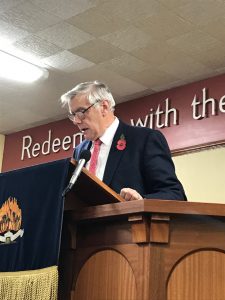
Rev Larry Power, Interim Moderator, led the meeting.

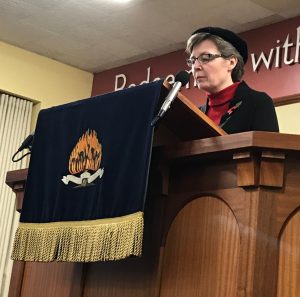
Mrs Pamela Foster, School Principal, gave a most encouraging report of the work of the past year.

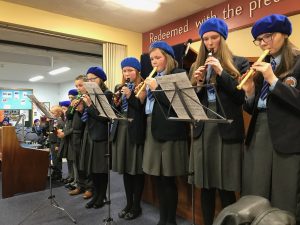
Some of the pupils providing some stirring hymns with a Protestant Reformation theme

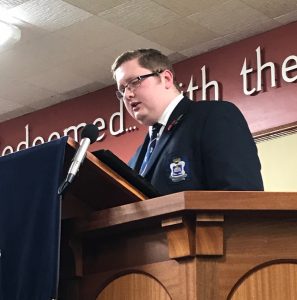
Mr Daniel Henderson, who comes from our Bridlington Congregation on the north east coast of England, preached from Proverbs 22:6: “Train up a child in the way he should go: and when he is old, he will not depart from it,” Proverbs 22:6.