
 “The thing that hath been, it is that which shall be; and that which is done is that which shall be done: and there is no new thing under the sun,” Ecclesiastes 1:9.
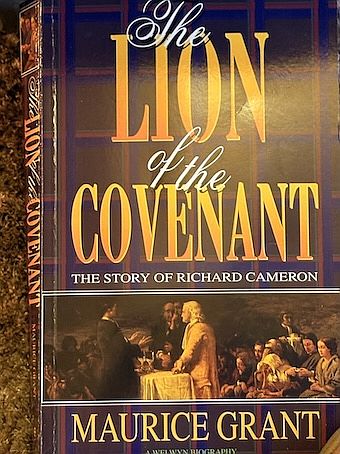
I have been reading with profit and encouragement, the life of Richard Cameron, ‘The Lion of the Covenant’, by Maurice Grant.
Copies may be purchased quite cheaply online – simply ‘Google’ the title.
Or you may read an online version at ‘The Lion of the Covenant’
As I read the story of a man honoured today amongst the Free Presbyterian Church of Ulster, or at least the older generation of our members, I was amazed at the parallel in his experiences at the hands of his fellow ministers to what is happening in our midst at present.
I am referring particularly to the reaction to Richard Cameron’s breach of what had been a ‘convention’ amongst the ministers of the Church of Scotland in those trying times.
In 1669 and again in 1672, the deceitful King Charles II, whom the ScotsPresbyterians had embraced most foolishly and that to their cost, introduced what was called ‘The Indulgences’.
It was his bid to stop the increasing rejection of the King’s imposition of ‘Erastianism’, the Crown’s control of the Church of Scotland like that which existed in England.
The great majority of the Presbyterian people rejected these unscriptural innovations and ‘field preaching’ became a feature of the religious life of Scotland. Approximately 350 ministers refused to serve in pulpits under the rule of the bishops that the King had introduced.
‘The Indulgences’ were a measure whereby ministers were offered reinstatement to their pulpits, and their stipends, if they but quietly acquiesced to the new situation in the Church of Scotland.
Most ministers refused and suffered the trials and hardships that opposing the King entailed. However, a few started to accept the offer of the King.
It was at that time that an unwritten agreement was reached amongst those who refused the King’s indulgences and continued to preach in the open fields and hillsides to many thousands of faithful believers, not to criticise those who compromised and returned to the ‘corrupted’ Church of Scotland.
No Division!
Their reason for this was to avoid ‘division’. This was most strange since those who embraced the indulgences were guilty of dividing and separating from the great majority who rejected the King’s interference as sinful!
However, this became the ‘convention’ at the field meetings. While many of the sins of the day, both political and religious, were condemned, no mention was made of the compromise and sin involved in accepting the King’s indulgences.
No mention was made on platforms and pulpits, that is, until young Richard Cameron, but recently licensed to preach, became exercised about the issue and came to the conclusion that the embracing by some of the King’s indulgences and the avoiding any condemnation of those who thus compromised, was contrary to the Word of God and was a chief cause of God’s judgment of Scotland.
That is when the opposition against the man of God began.
He launched into an scriptural exposure of this evil and almost immediately was met with opposition from the main body of ministers, for what he was saying was a condemnation of their silence in the face of this sin.
As I read how Richard Cameron was opposed and of the attempts to have him condemned by his ministerial brethren, I was made to think of the verse that heads this article!
“The thing that hath been, it is that which shall be; and that which is done is that which shall be done: and there is no new thing under the sun.”
Should you obtain a copy or consult the online copy, be sure to study in particular the events recorded on pages 84, 90-98, and 110-111.
I believe you will see how sinful were the actions of those ministers who toiled most treacherously to have him retract his condemnations of the compromisers and give them an undertaking that he would not ever repeat them.
When he refused, he became the target of attempts to ‘judicially’ have him condemned and discredited.
We are aware, I am sure, of how Richard Cameron gave his life in the defence of the Gospel of Jesus Christ.
His stand, his witness and his death were greatly instrumental in the preservation of the Gospel in Scotland.
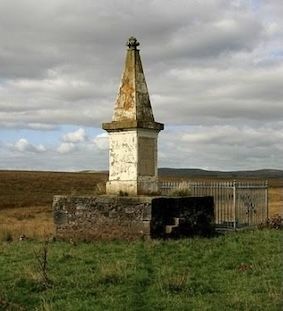
I recall a foggy winter’s day when my wife, Ann, and myself some 40 years ago, struggled through briars and over a barbed wire fence to stand at the monument which had been erected to mark the place on Airds Moss where Richard Cameron and a number of his companions were killed by the King’s troops.
The wickedness that brought about that tragedy is ‘alive and well’ today. It may not have the power to end life as it did the life that holy man, but it offers resistance still to any stand taken for the cause of Christ today!
Rev Ivan Foster (Rtd)
4th November 2026